Sealing Cracks Before Water Reaches Base
Crack Repair in Bakersfield for asphalt pavement where temperature swings and water infiltration turn minor cracks into major structural damage
Cracks begin as hairline surface openings caused by UV oxidation and temperature stress, then widen as water enters during rain, expands when heated, and carries debris that prevents the crack from closing. Valley temperature extremes accelerate this cycle in Bakersfield, where summer heat softens asphalt while winter cold makes it brittle, causing cracks to spread faster than in more moderate climates. Proper crack sealing stops this progression by filling openings with flexible material that moves with the pavement, preventing water from infiltrating into the base layer where it causes the structural failure that leads to potholes and pavement collapse.
Crack repair involves cleaning debris from the crack opening using compressed air or brushing, then filling with hot-pour rubberized sealant or cold-pour crack filler selected based on crack width and expected movement. Sunnyseal Coating And Striping Inc selects sealant type based on crack size and customer budget, with wider cracks requiring more material and flexible formulations that accommodate ongoing pavement movement.
Request a crack evaluation to assess current pavement condition and determine which cracks require immediate sealing versus areas where preventive coating might address surface issues before cracking develops.
What Changes After Cracks Are Sealed
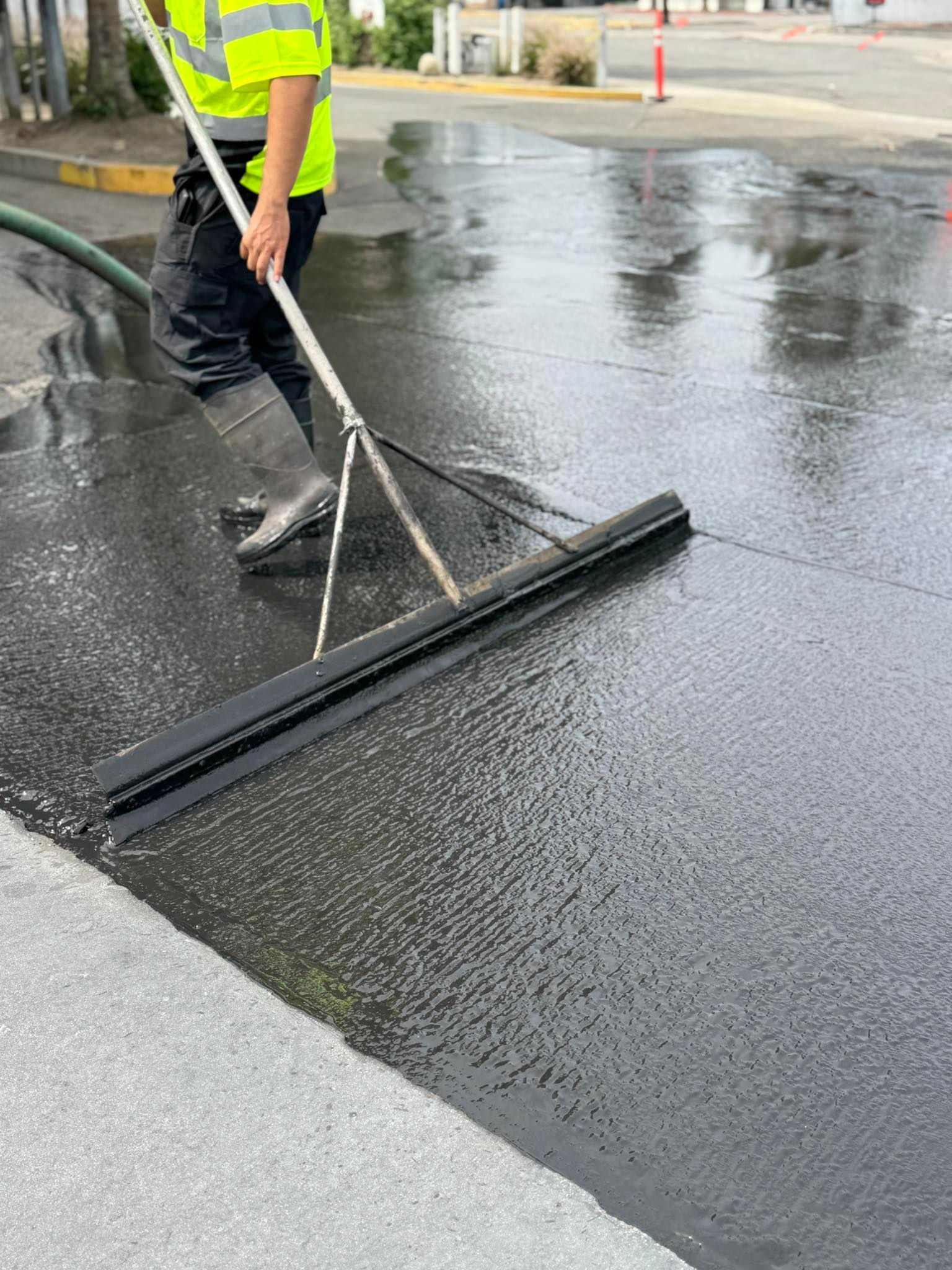
The sealing process involves direct pour application where sealant flows into the cleaned crack and fills the opening from bottom to top, creating a waterproof barrier that flexes with temperature-driven pavement movement. Crack width determines material selection, with narrow cracks accepting thinner sealants while wider openings require thicker formulations that won't sink below the surface as they cure.
After crack sealing is complete, pavement surfaces show filled lines where cracks previously allowed water entry, the sealed areas prevent rainwater from penetrating into the base layer, and the flexible sealant accommodates normal expansion and contraction without pulling away from crack edges. This barrier stops the cycle where water infiltration weakens the base, creates voids beneath the surface, and eventually leads to pavement collapse and pothole formation.
Crack sealing works as preventive maintenance on structurally sound pavement but does not repair damage that has already occurred beneath the surface. Properties with extensive cracking across large areas may benefit more from full sealcoating that addresses both surface protection and crack filling in a single application, while isolated cracks in otherwise good pavement are ideal candidates for targeted crack repair.
Answers to Frequent Service Questions
Pavement owners considering crack repair work in the Bakersfield area often need clarification about timing, material options, and how crack sealing fits into overall pavement maintenance strategy.
What size cracks should be sealed to prevent further damage?
Any crack wider than a quarter inch allows significant water infiltration and should be sealed as preventive maintenance, while hairline cracks may be addressed through sealcoating if the overall pavement surface needs protection.
How does sealant selection affect crack repair durability?
Hot-pour rubberized sealants remain flexible across wider temperature ranges and last longer under traffic, while cold-pour fillers cost less and work for smaller cracks or properties where budget limits more expensive materials, though they typically require more frequent reapplication.
Why do Valley temperature extremes cause more pavement cracking?
Asphalt expands in summer heat and contracts in winter cold, with the repeated expansion and contraction cycles creating stress that opens cracks, and Bakersfield's wide temperature swings between seasons accelerate this cycle compared to areas with more stable year-round temperatures.
When is the best time to seal asphalt cracks?
Crack sealing can be performed whenever pavement is dry and temperatures are moderate enough for proper sealant curing, but addressing cracks before winter rains prevents water infiltration during the wet season when base damage progresses most rapidly.
What happens if cracks are left unsealed?
Water enters through crack openings and reaches the base layer beneath the asphalt, where it weakens support and creates voids, eventually causing the surface to collapse into potholes that require more expensive repair than preventive crack sealing would have cost.
Licensed and insured with 17 years of pavement maintenance work throughout the Central Valley, Sunnyseal Coating And Striping Inc applies attention to detail when selecting crack filler materials and making sure coverage is complete across all damaged areas. Schedule a property review to identify cracks requiring immediate attention and discuss whether targeted crack repair or comprehensive sealcoating better addresses your pavement maintenance needs.